
Is Your Renovation Legal? 5 Permits That Stand Between You and a Fine in Dubai 2026
Renovating your home or commercial space in Dubai? Don’t start any work until you’ve secured the proper permits. Dubai’s construction laws make permits mandatory for significant renovations, and for good reason. Skipping the permit process isn’t a shortcut — it’s a legal risk. Authorities can halt your project on the spot and slap you with hefty fines (up to AED 50,000 for major violations) if you renovate without approval. In some cases, you might even be ordered to undo unauthorized work at your own cost. These approvals are designed to ensure your renovation meets Dubai’s safety and building standards, protecting structural integrity, occupants, and neighboring properties while complying with fire and regulatory requirements.
Why a 2025 guide? Building regulations evolve yearly. Dubai Municipality frequently updates its building codes, and 2025’s rules put extra emphasis on safety and sustainability. What passed muster a year or two ago might require a new approval today. Whether you’re updating a villa or fitting out a shop, being aware of the latest permit requirements will save you from legal headaches, costly delays, or even project shutdowns. Smart property owners plan ahead – they get the right permits to avoid fines, work stoppages, or jeopardizing their investment.
Below, we outline five essential permits you absolutely need before any full home or commercial renovation in Dubai. This guide explains what each permit is for, when you need it, and how long it typically takes to obtain. We’ll also highlight how the process can differ slightly between residential and commercial projects. By the end, you’ll know exactly which approvals to line up – and we’ll let you in on how our company can handle the whole process for you, so you can renovate stress-free.
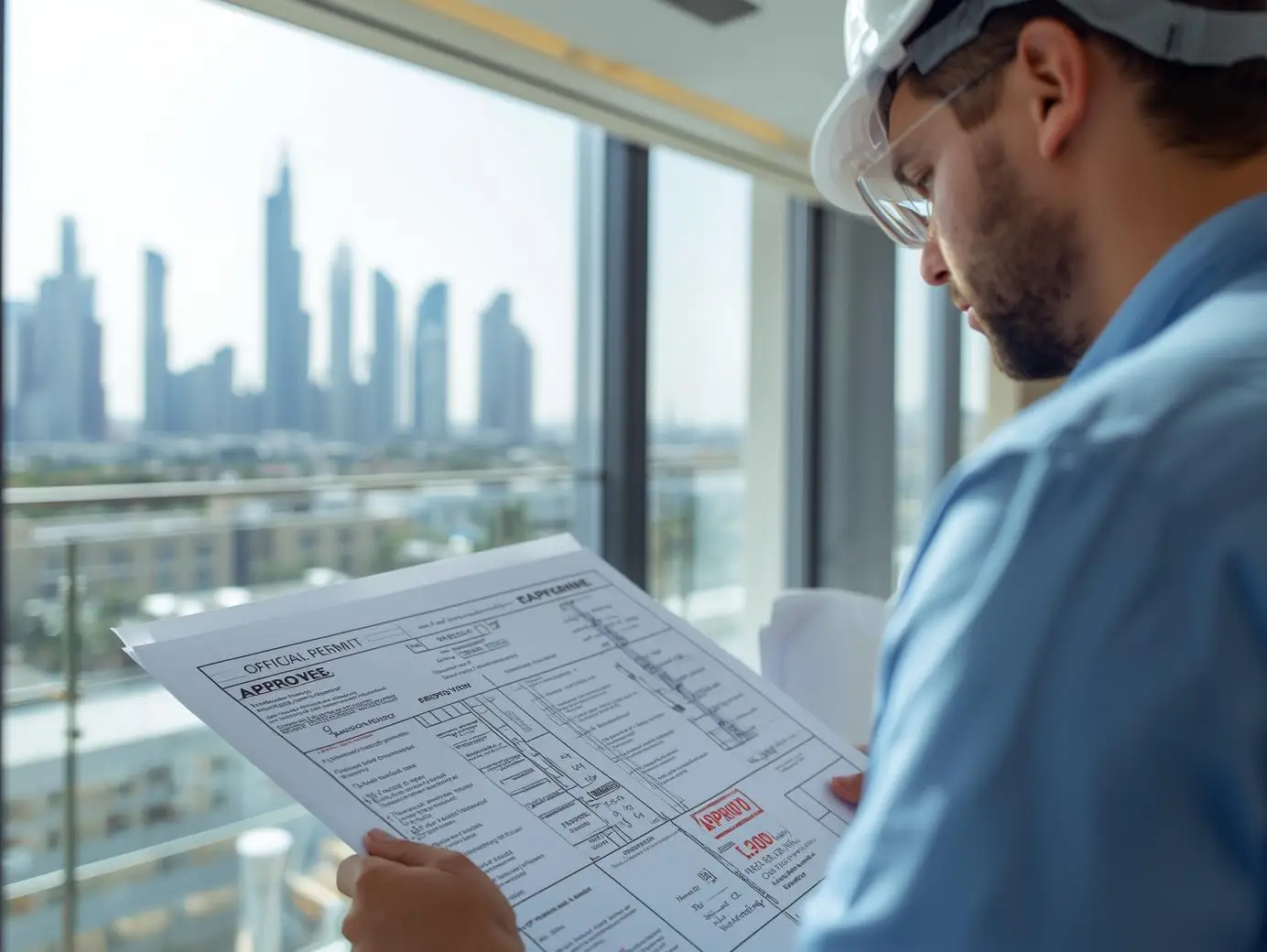
1. Dubai Municipality Building Permit
The Dubai Municipality (DM) Building Permit is required for renovation works that involve layout changes, structural elements, or key building systems. This permit is required for structural changes and significant interior alterations – essentially any work beyond simple cosmetic updates. It ensures your renovation plans comply with Dubai’s building code and safety regulations.
In fact, the building permit is the core approval that legitimizes your project. Without it, you legally cannot start the renovation. Both homeowners and business owners must obtain this permit (or the equivalent from the relevant authority) before breaking walls or rerouting pipes.
The permit is issued by Dubai Municipality for most areas in Dubai. (If your property is in a free zone or special development, a different authority like the Dubai Development Authority (DDA) or Trakhees may issue a similar permit – but the requirement is the same.)
The application must be filed through a Dubai-licensed engineer or contractor, not by individuals directly. Only licensed contractors can apply for permits and carry out the works; hiring an unlicensed contractor is illegal and can even void your building insurance.
Some key points about the Building Permit include:
- When It’s Required: Before any major renovation work begins. Dubai law requires you to obtain this permit in advance. Even for interior fit-outs of offices or shops, a building permit (often referred to as a “fit-out permit” in commercial contexts) is mandatory. Minor cosmetic works (like painting or changing furniture) don’t need it, but, on the whole, as soon as you’re altering walls or systems you do.
- Why It Matters: This permit is your legal safeguard. It reflects that an official authority has checked your plans against building codes (for structural safety, fire safety, etc.). Working without a building permit risks serious penalties. Dubai inspectors can issue a stop-work order, and you’d face fines or forced project delays if caught without this approval. In short, the building permit is foundational – every other approval often hinges on it.
2. Structural Modification Permit
Not all renovations involve structural changes, but if yours does, you will need a Structural Modification Permit (sometimes considered a specialized part of the building permit). This permit specifically covers changes to the building’s structure – meaning any alteration to load-bearing elements or the overall framework of your property. Structural modifications include things like removing a load-bearing wall, adding a new extension or floor, enlarging windows or doors in a load-bearing wall, or modifying beams, columns, or the roof structure. Dubai authorities treat these changes very seriously for obvious reasons: the stability of the building and safety of its occupants are on the line.
Here’s what to know about structural permits:
- When It’s Required: Any time you alter structural elements. For example, knocking down an internal wall (even inside your apartment or villa) or cutting a new opening for a bigger window isn’t a simple cosmetic task – it’s a structural change that always requires approval. Similarly, adding a mezzanine floor, extending a room outward, or making changes to the building’s exterior facade or roof structure would all fall under this category and need a structural permit. Both residential and commercial projects must comply – from combining two villa rooms into one open space to reconfiguring a shop’s layout with major structural tweaks, a permit is mandatory.
- What It Ensures: Dubai Municipality enforces strict engineering guidelines for any structural modification. As part of obtaining this permit, you’ll need a licensed structural engineer to assess and stamp your plans. Detailed structural drawings and calculations (showing that beams, columns, foundations, etc., will support the new design safely) must be submitted. The permit process ensures that your changes won’t compromise the building’s integrity – for instance, that removing a wall won’t weaken the structure or violate building codes. Essentially, this approval is about safety and stability. The city will not allow structural work that could put occupants or neighboring properties at risk.
- Process & Timeline: In practice, the structural modification permit is often obtained in tandem with the main building permit – you don’t usually apply for it in isolation. Your consultant will indicate on the building permit application that structural work is involved, and additional documents (like structural calculations) will be reviewed by municipal engineers. This can add a bit of time to the overall approval process. Expect a thorough review: authorities may take a few extra weeks to scrutinize structural plans, especially for major changes. It’s wise to budget some cushion into your timeline for this. The good news is once approved, you have peace of mind that the structure is sound. Never attempt structural changes on the sly – aside from being illegal, it’s extremely dangerous.
- Typical Approval Time: Once you submit plans, expect roughly 1–3 weeks for Dubai Municipality to review and approve a straightforward renovation. Simple interior updates might get cleared in about 10 working days, while larger or more complex projects can take several weeks. The process involves submitting detailed drawings (architectural, structural, MEP), paying the fee, and addressing any comments or required revisions from the municipal reviewers.
3. MEP Approval (Mechanical, Electrical, Plumbing)
Most full renovations involve some degree of MEP work – that’s Mechanical, Electrical, and Plumbing. Whether you’re moving the kitchen sink, adding new light fixtures, upgrading the air conditioning, or rerouting plumbing for a bathroom remodel, these changes require MEP approvals. In Dubai, you cannot just rewire or re plumb as you plans for these systems must be reviewed to ensure they meet safety and capacity standards.
The MEP approval isn’t always a stand alone permit paper like the building permit rather, it’s a set of sign-offs or No Objection Certificate (NOC) that form part of your overall permit process. Essentially, Landlord Authority (or the relevant authority) will check and endorse your mechanical/electrical/plumbing plans, often in coordination with specialized agencies like Civil Defense or Dubai Electricity and Water Authority (DEWA).
Key details about MEP approvals:
- What It Covers: All significant changes or additions to plumbing, electrical, or HVAC systems. For instance, if you’re relocating plumbing lines (moving a bathroom or kitchen location), installing new piping, adding a water heater, or altering drain lines – that requires approval.
Electrical work like adding new circuits, increasing your electrical load (say for new appliances or IT equipment), changing the main distribution board, or extensive rewiring must be approved. HVAC (mechanical) changes, such as adding or moving air conditioning units, ductwork changes, or ventilation alterations, also fall under this umbrella.
Essentially, any MEP work beyond like-for-like replacement is reviewed. These specific permits ensure all new installations are safe and up to code, posing no danger to occupants or the community.
- When It’s Required: Whenever MEP systems are affected by your renovation. Even in a “simple” home renovation, this is common – imagine upgrading a kitchen, which usually means plumbing and electrical changes, or adding recessed lights which affects wiring.
For commercial projects, it’s almost always needed: office fit-outs might involve installing new lighting layouts, shifting AC diffusers, adding sinks or toilets, etc. Dubai authorities will expect detailed MEP schematics as part of your permit submission if such work is involved.
Note: Minor changes like swapping a faucet or light switch likely don’t need a permit, but anything that requires running new pipes or cables generally does. - Approval Process: Your renovation plans must include MEP drawings prepared by a qualified engineer. Often, a Dubai-licensed MEP consultant or engineer must stamp these plans. The municipality’s experts (or free zone authority’s experts) will review the calculations – e.g., is your electrical load within safe limits?
Similarly, if you’re doing major telecom re-cabling in a commercial space, Etisalat or DU might be involved for their infrastructure. These utility NOCs are obtained during the permit process – your consultant will usually handle the coordination.
Is the plumbing tied into existing drainage properly? Are AC ducts balanced? In many cases, approvals also involve external utility authorities. For example, if you’re substantially increasing electrical load or relocating an electricity meter, you may need a NOC from DEWA (Dubai Electricity and Water Authority).
Including heavy MEP changes can slightly extend your permit timeline. Each additional approval (like a DEWA check or a separate fire safety check for electrical equipment) can add a few days or more. As of 2026, Dubai’s online permit system has made things faster, but realistically, if your project has extensive MEP work, expect a few extra working days for these reviews.
For instance, a straightforward interior remodel with no major MEP might sail through in two weeks, whereas one with a full electrical upgrade and new AC units might take three or four weeks after addressing utility comments. The key is to submit comprehensive, clear MEP plans so approvals go smoothly.
4. Civil Defense Approval (for Commercial Properties)
If you’re renovating a commercial property – an office, retail store, restaurant, warehouse, or any place of business – Dubai Civil Defense (DCD) approval is a crucial step. The Dubai Civil Defense is the authority responsible for fire safety and emergency readiness in buildings.
In commercial renovations, almost inevitably you will be altering something that touches on fire and life safety systems (for example, changing the layout can affect fire exits; adding partitions might require adjusting sprinklers and smoke detectors). Civil Defense approval ensures that your renovated space will still comply with all fire codes and safety regulations before it opens to employees or the public.
Key points about DCD approval:
- When It’s Needed: For virtually all commercial fit-outs or renovations that affect fire safety. This includes offices, shops, restaurants, clinics – any non-residential interior work. Dubai Civil Defense must review and sign off on changes to fire alarms, sprinkler systems, emergency lighting, exit routes, smoke extract systems, and any other life safety feature in the space.
In practice, even if your commercial reno seems minor, it likely still needs DCD’s nod. For residential projects: standalone homes typically do not require separate Civil Defense approval, but if you are renovating an apartment within a larger building, any changes to fire systems (like relocating a sprinkler head for a dropped ceiling) must be done by a DCD-certified contractor and in line with DCD rules (usually coordinated via the building management). The general rule: commercial = DCD required, residential = DCD usually not directly involved (aside from meeting building code fire requirements). - What It Involves: Getting DCD approval means you (or your contractor/consultant) will prepare a specialized set of fire and life safety drawings in accordance with the UAE Fire & Life Safety Code. This could include fire alarm layouts, sprinkler modifications, exit signage, smoke detector placements, etc.
These plans are submitted to the Civil Defense authority for review. Civil Defense engineers will verify that the design adheres to code – for example, that your new office partition doesn’t block a fire exit, or that your ceiling plan maintains proper sprinkler coverage and smoke detector spacing.
A Civil Defense NOC or stamped approval is then issued. Additionally, after construction, Civil Defense may conduct an on-site inspection to ensure everything was installed correctly before giving final clearance.
- Coordination with Building Permit: DCD approval usually happens in parallel with the municipality building permit process for commercial projects. Dubai Municipality will often not release the final building permit until Civil Defense has signed off on the fire safety aspects.
In many cases, your consultant submits to DCD and DM simultaneously, or DCD through a dedicated portal. It’s a separate channel, but both are mandatory for completion. Also, you might need a DCD-approved contractor to handle specific fire system works (e.g., only certified fire contractors can install or modify sprinklers and alarms).
In fact, if your project involves fire system changes, you’ll need documentation from a DCD-approved fire contractor as part of your application. - Timeline: Plan for additional time to get Civil Defense approval. Even with efficient online systems, the DCD review and NOC issuance can take around a week or two (it varies with complexity).
As a rule of thumb, a straightforward office fit-out might get DCD initial approval in under 10 days, whereas more complex projects or those requiring multiple revisions could take a few weeks.
Factor this into your project schedule, because it’s on top of the DM permit review. For example, if DM’s review is 2 weeks and DCD’s is another 1–2 weeks, your overall approval might stretch to 3–4 weeks.
The Mazari Contracting team notes that whenever Civil Defense coordination is involved, you should expect some extra days for those NOCs. And don’t forget final inspections: DCD often does a final site inspection after your contractor finishes the work, which you need to pass to officially open or use the space.
5. NOC from the Developer or Building Management

Before you even get the government permits, there’s another crucial approval that almost every Dubai property requires a NOC from your property’s developer, owners association (OA), or building management.
This isn’t a permit from authorities, it’s an official permission from your community/landlord that they have “no objection” to your planned renovation. Dubai’s communities and buildings have their own rules and guidelines, and they want to ensure your plans won’t violate those or negatively impact others.
In fact, authorities will not even review your permit application until you secure this NOC in most cases. So, consider the NOC your first step once you have a renovation plan.
Residential vs. Commercial: How Permit Processes Differ
Dubai’s permitting system applies to both homes and commercial properties, but there are some key differences and additional steps depending on the project type. Here’s how the process may differ between residential and commercial renovations:
- Additional Approvals for Commercial: As noted above, commercial projects typically involve more regulatory stakeholders. A home renovation generally deals with Dubai Municipality (for the building permit) and the community developer (for the NOC).
In contrast, a commercial fit-out often requires extra clearances – for example, Dubai Civil Defense must approve the fire safety plans for almost every commercial project. There may also be sector-specific permits (a restaurant needs Food Safety Dept approval, a clinic needs DHA approval, etc., though those are beyond the general construction permits scope).
The key difference is the number of authorities: commercial = multi-agency approvals, residential = usually just DM + community. - Different Permitting Authorities by Location: Most individual homes and many businesses in Dubai fall under Dubai Municipality’s jurisdiction. However, if your property is in a free zone or a special development area, the permitting authority might differ.
For example, a shop in Palm Jumeirah or JAFZA might be permitted by Trakhees, and offices in Dubai Design District or TECOM zones go through Dubai Development Authority (DDA) instead of DM. The types of permits are similar, but the application portal and stamp will come from that authority.
Residential properties in those areas also follow the respective authority. The processes are broadly similar (submit plans, get NOC, etc.), but it’s important to know your jurisdiction. Free zones sometimes have slightly different timelines or fees, but they still enforce the core Dubai Building Code. - Timeline and Complexity: Commercial renovations can be more complex, not just because of multiple approvals, but also the scale of work. Coordinating an office floor remodel with dozens of sprinklers, hundreds of lights, and integrated HVAC systems is inherently more involved than, say, renovating a kitchen at home.
Thus, commercial permit approvals can take longer on average. Each extra NOC or review (DCD, utility, landlord, etc.) adds to the timeline. It’s not unusual for a full office fit-out permit process to take 4–6 weeks in total, whereas a straightforward apartment renovation might get approvals in 1–3 weeks. - Regulatory Focus: Generally, fire safety is the biggest additional focus in commercial projects, given higher occupant loads and public access. Structural safety and basic code compliance are important in both realms, but a home renovation won’t have to worry about things like occupancy load calculations or emergency exit signage, whereas a commercial one will.
Conversely, in a residential renovation, you might deal more with aesthetic guidelines (some communities strictly control external appearance, landscaping changes, etc., requiring separate aesthetic approvals from the developer’s design review).
Commercial projects in shell-and-core spaces don’t have that concern but must adhere to technical fit-out guidelines. - Costs and Deposits: Permit fees and deposits can also differ. Residential OAs usually take a modest deposit (as mentioned, a few thousand AED).
Commercial landlords might require larger deposits or bank guarantees, especially for big spaces, to cover potential damages. Government permit fees might scale with project size but aren’t necessarily higher just because it’s commercial – they depend on area (sq. ft. or contract value).
For instance, DM’s permit fee could be similar per square foot; however, a large office floor naturally costs more than a small apartment because of size. Civil Defense and other agencies may have their own fees as well for plan approvals and inspections in commercial cases.
In summary, the core steps (get NOC, hire licensed professionals, submit drawings, obtain permits, inspections) apply to both homes and businesses. The differences lie in the extra layers that a commercial project typically involves and slightly varied channels depending on location.
As a homeowner, you mainly interact with DM and your community as a business owner, you’ll juggle DM (or DDA/Trakhees), Civil Defense, maybe DEWA, and property management. Knowing these distinctions helps you prepare the right documents and realistic timelines for a smooth approval process.
Pro Tip: If you’re ever unsure which approvals apply to your project, consult with a professional contractor or approvals consultant early. They can map out the required permits based on your project scope and location – be it a downtown apartment, a villa on the Palm, or a store in a mall.
Ready to Renovate? Leave the Permits to Us!
Renovating in Dubai doesn’t have to mean dealing with complex approvals or endless paperwork. This is where our team steps in. We manage the entire permit process from start to finish—from preparing drawings and documentation to coordinating with Dubai Municipality, Civil Defense, and developers for all required NOCs.
With experts who stay updated on the latest regulations, approvals are handled efficiently and correctly, so your project stays compliant and on schedule. You focus on designing and planning your renovation; we take care of the formalities.
Planning a renovation? Get in touch today and let us handle the permits while you move forward with confidence—safely, legally, and stress-free.
FAQ'S
Do I need Dubai Municipality approval for internal renovations?
For purely cosmetic changes like painting or tiling, usually no. However, if you are moving walls, changing the layout, or modifying plumbing/electrical loads, Dubai Municipality (and potentially DDA or Trakhees depending on location) approval is mandatory.
How long does it take to get renovation permits in Dubai?
On average:
Residential renovations: 2–3 weeks
Commercial fit-outs: 3–6 weeks
Timelines depend on the scope of work, required approvals (Civil Defense, DEWA, NOCs), and whether revisions are requested by authorities.
LET’S TALK
COPYRIGHT © 2025 Creative Home Building Contracting L.L.C